Buying or renovating in Manhattan and wondering how landmark status will shape your plans? You are not alone. Landmark rules protect the city’s architectural character, but they also add steps, approvals, and timelines you should understand before you sign a contract or order materials. In this guide, you will get a clear overview of what landmark status means, how approvals work, and what to expect for common Upper West Side prewar renovations like windows, façades, and rooftops. Let’s dive in.
What landmark status means
Landmark designation in New York City is administered by the Landmarks Preservation Commission, often called the LPC. The LPC can designate individual landmarks, interior landmarks, historic districts, and scenic landmarks like parks. In Manhattan and on the Upper West Side, most day-to-day controls focus on exterior features that are visible from a public way, such as streets or sidewalks. If an interior is specifically designated, changes to that interior also require LPC review.
For you as an owner or buyer, the key point is simple. Any exterior change that is visible from a public street usually needs LPC approval. Interior work in non-designated interiors follows normal Department of Buildings permits. Demolition of landmarked buildings or contributing buildings within historic districts is tightly controlled and often denied. Skipping approvals can lead to violations, stop-work orders, and costly corrective work.
How designation works
Designation process
The LPC identifies and researches potential landmarks through staff surveys, community requests, or city initiatives. A public hearing is held, owners and neighbors may testify, and the commission votes. Once designation is adopted, the LPC’s jurisdiction over covered features begins.
Decision criteria
When reviewing alterations, the LPC looks at historical and architectural significance, the integrity of original materials, and how a building contributes to its district. The commission leans on published policies and the Secretary of the Interior’s Standards for Rehabilitation as a guiding framework. In practice, that means a strong preference for repair over replacement, and for new work that is visually compatible with historic materials and profiles.
Approvals you may need
Certificate of No Effect
If proposed work does not affect protected features, LPC staff may issue a Certificate of No Effect. This is common for interior work in non-designated interiors or for exterior work that is not visible from the public way. These reviews are typically faster.
Certificate of Appropriateness
Changes that alter significant features or are visible from the street usually require a Certificate of Appropriateness. Some items can be approved at staff level if they are minor or in-kind. Larger changes, such as rooftop additions or alterations to prominent façades, may require a public hearing and full commission vote.
Emergencies and pre-application
Emergency stabilization is possible when safety is at risk, but you should still notify the LPC and secure required permits. For complex projects, a pre-application consultation with LPC staff is strongly recommended. Early feedback reduces surprises but does not guarantee approval.
LPC and DOB coordination
Two permit streams
You will usually manage two parallel processes: LPC approval for landmark-related review and Department of Buildings permits for construction, structural work, and safety. The DOB often will not issue final exterior permits without your LPC approval. LPC approval does not replace DOB permits.
FISP and Local Law 11
Buildings over six stories are subject to the Façade Inspection Safety Program, often called Local Law 11. FISP applies whether or not the building is landmarked. On a landmarked building, façade repairs triggered by FISP will also involve LPC review when work is visible from the street.
Renovations in UWS prewar buildings
Windows
The LPC prefers you repair original historic windows. If replacement is necessary, expect to match the original look. That includes sightlines, muntin patterns, operation type, profiles, material, and color. Double-glazed replicas that maintain slim historic profiles are often approvable. Interior or removable storm windows are a favored energy solution when preservation of original sash is feasible. Custom fabrication adds time. Lead times of 8 to 16 weeks or more for historic-style units are common.
Masonry and ornament
For brownstone, brick, limestone, and terra cotta, the LPC favors repair over replacement. Mortar color and hardness should match historic material. Full replacement of brownstone facing or terra-cotta units requires careful documentation and matching of material and finish. Cornices and decorative elements are highly visible. Expect detailed shop drawings, engineered attachments, and often a Certificate of Appropriateness.
Stoops and storefronts
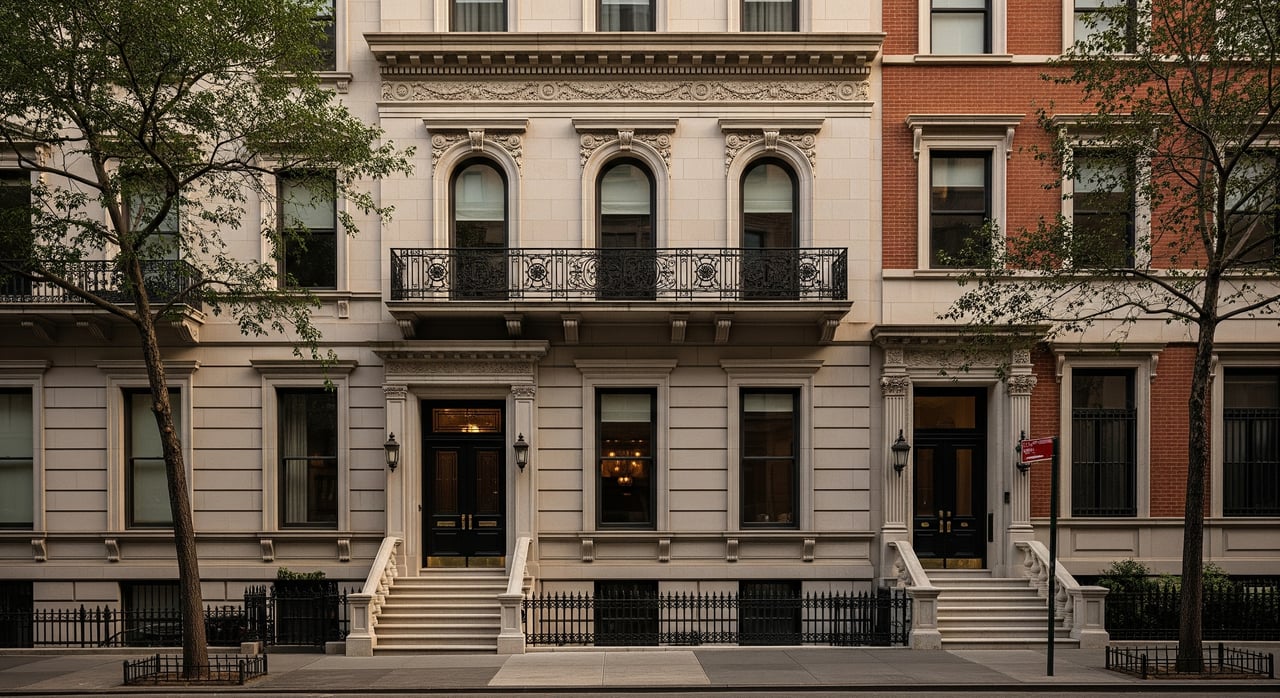
Stoops, parlor-level entries, and storefronts are defining features on the Upper West Side. Alterations to stoops, railings, and parlor windows typically require LPC review. For commercial bases, restoration to a historically appropriate rhythm and scale is often encouraged.
Rooftops and mechanicals
Rooftop additions, bulkheads, and penthouses receive close scrutiny. Visibility from public ways is the central test. Setbacks, screening, and minimizing massing are common strategies. Through-wall penetrations and grill locations that are visible from the street also need LPC review. Placing HVAC on secondary elevations or further back reduces visibility and improves approval odds.
Costs and timelines
Preservation-grade materials and custom replication come with premiums. Historic windows, terra-cotta replication, and cornice work are typically more expensive than off-the-shelf options. Plan for extended schedules as well.
Typical timing ranges:
- Pre-design and contractor selection: 2 to 8 weeks
- Optional LPC pre-application meeting: 2 to 6 weeks to schedule
- Drawings, specs, and submission package: 4 to 12+ weeks
- LPC review outcomes:
- Staff-level or Certificate of No Effect: often 2 to 8 weeks
- Staff-level Certificate of Appropriateness for in-kind work: 4 to 12 weeks including revisions
- Full commission review for major changes: 3 to 6+ months
- DOB permit processing: 2 to 12 weeks, depending on scope and review cycles
- Construction: from weeks for minor repairs to many months for large façade or window programs
These ranges are common, not guaranteed. Early LPC engagement and complete documentation tend to shorten review cycles.
Due diligence checklist
Before you buy or renovate, use this checklist to avoid surprises:
- Confirm designation status and boundaries through LPC maps and district reports.
- Request the building’s LPC approval history, including past Certificates of Appropriateness and No Effect.
- Pull DOB job filings, open permits, violations, and any FISP reports if the building is over six stories.
- Commission a preservation-minded architect and façade or structural engineer to assess windows, masonry, cornices, and roofs.
- Secure cost comparisons for repair versus replication and factor in extended lead times.
- Confirm there are no unresolved LPC or DOB violations, and check lender or insurer requirements for compliance.
- Retain an expeditor familiar with LPC and DOB, and consider legal or tax counsel if you plan income-producing work.
Incentives and taxes
For income-producing properties, the Federal Historic Rehabilitation Tax Credit may be available for certified rehabilitation. New York State historic tax credits and other programs may also apply in specific cases. These incentives usually involve coordination with the State Historic Preservation Office and adherence to standards consistent with LPC practice. For owner-occupied residences in Manhattan, direct local tax abatements tied specifically to landmark work are limited. Consult your tax advisor for current eligibility and process.
Common gray areas
Practice can vary by district and reviewer, especially on materials like aluminum-clad or fiberglass windows that aim to replicate original wood profiles. Energy upgrades are often negotiable when they are not street-visible and do not change historic profiles. Rooftop visibility is a judgment call. Prepare visibility studies and document precedents from nearby approvals. A pre-application meeting to align on approach is often the best first step.
Work with the right team
A preservation architect, façade specialist, and experienced contractor are invaluable on landmarked projects. Clear drawings, photographs, material samples, and a narrative that explains compatibility help staff assess your proposal. Keep execution tight. Deviations from approved plans can trigger violations and rework. The most successful projects pair strong documentation with early LPC dialogue.
Ready to plan a landmark-sensitive renovation or evaluate a purchase with confidence? For discreet, end-to-end guidance on due diligence, approvals, and market strategy, connect with Catherine Juracich.
FAQs
What is NYC landmark status versus the National Register?
- NYC landmark status is local and regulatory, administered by the LPC, and it governs visible exterior changes and designated interiors. National Register listing is federal and primarily honorific, with separate incentives for income-producing properties.
Do I need LPC approval to change windows in a historic district?
- Yes, if the windows are visible from a public way. The LPC prefers repair, and replacements must closely match historic appearance, including profiles, operation, and color.
How long does LPC approval take for exterior work?
- Staff-level reviews can take 2 to 12 weeks, while major changes that require a public hearing often take 3 to 6 months or more, depending on complexity and revisions.
Can I add a rooftop terrace or bulkhead on a landmarked building?
- Possibly, if not visible from public ways or if visibility is minimized. The LPC closely reviews rooftop work, and setbacks, screening, and massing reductions are common requirements.
What incentives exist for landmark renovations in Manhattan?
- Income-producing properties may qualify for the Federal Historic Rehabilitation Tax Credit, and New York State offers additional programs in select cases. Owner-occupant incentives are limited; consult a tax professional.